“If I’m not ill, people won’t care about me”
Feb 17, 2026
In a recent group coaching call, someone brought up a fear that hits so close to home: “If I’m not ill, people won’t care about me.”
One of the reasons I love group calls so much is because all the different perspectives set off a cascade of insights in my mind, which sparks major creativity in my soul!
The other day, I came to the conclusion that believing you “need to be ill to be cared for” is fundamentally rooted in believing you’re not good enough.
Because if you believed that you ARE good enough – as a whole, unique, nourished human being – you wouldn’t need to sacrifice your life to “deserve” care!
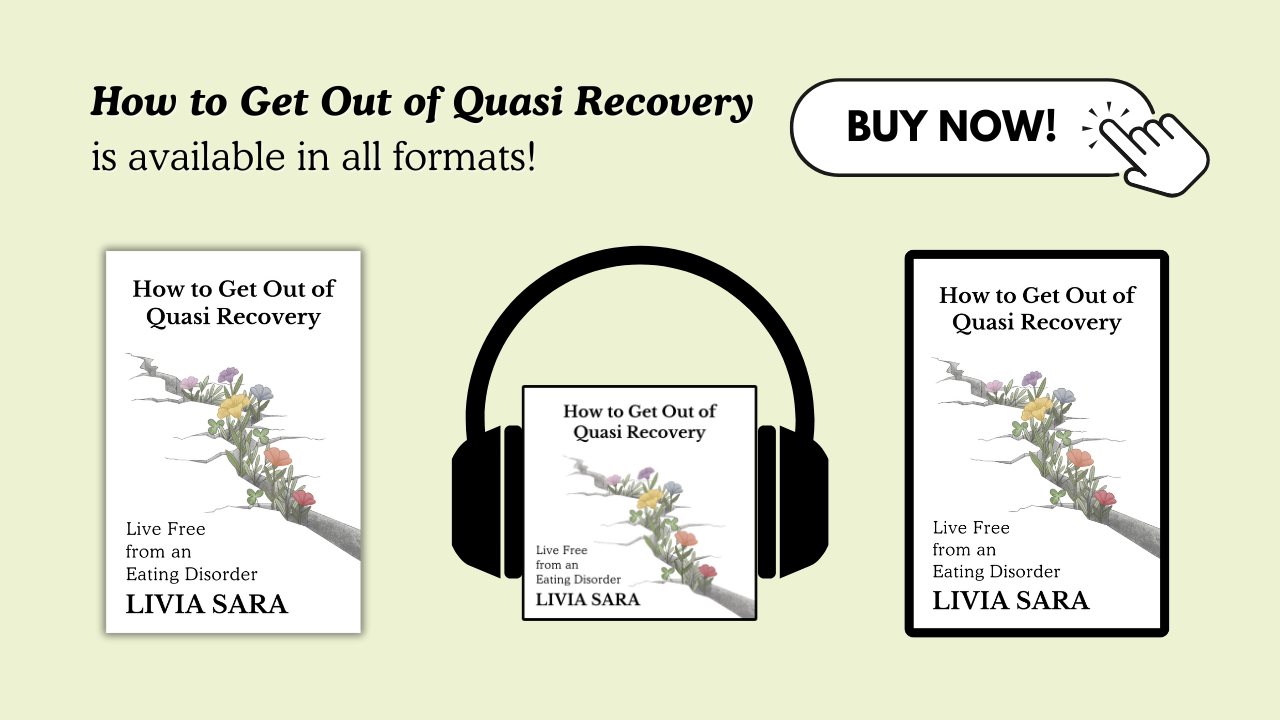
On that note, and because the group call was part of 51 Days to Freedom, I’d like to share two chapters with you from my book How to Get Out of Quasi Recovery. Specifically, the chapters “Good Enough” and “Existential Crisis.”
48. Good Enough
“Enough” is like an asymptote. In mathematics, an asymptote is a line that continuously approaches a given curve but does not meet it at any finite distance. Striving for perfection is the journey along the curve. The closer you get to the imaginary line, the more you want to keep going. But because perfection is an illusion, you infinitely trod along, only to keep confirming your failure to meet your idealistic expectations.
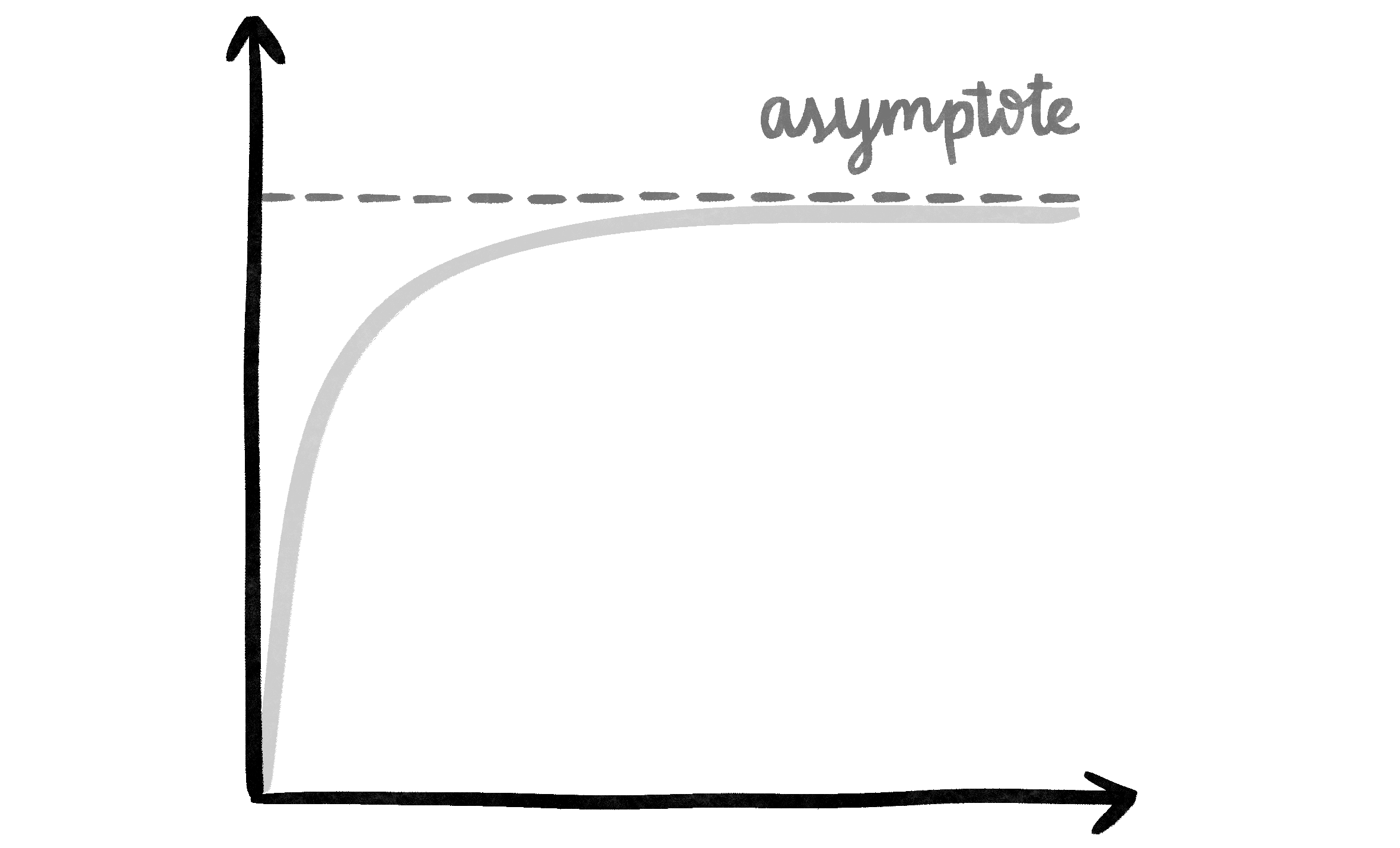
At first sight, this discernment may be discouraging. If I can’t ever be good enough, what’s the point? The point is that there is no physical point that can define your worth. You will never reach the point of “good enough” because you are worth so much more than that. Once you realize that good enough is a made-up story, a game so infinite that it becomes boring, you can decide to stop playing.
This curve and its asymptote show up everywhere. In the eating disorder story, reaching the point of “sick enough” becomes the purpose. You make a pact with yourself that your eating disorder isn’t “valid” until you reach the asymptote. But because the line is made up and the curve can never touch it, you toil endlessly at a game you can never win – and where’s the fun in that? Just as you will never be “perfect,” your eating disorder will never be “valid” and you will never be “sick enough.” These “achievements” can never be objectively defined because they are subjective stories.
After the eating disorder, you may continue to question yourself. How do I know my discovery journey is good enough? How do I know I’m contributing enough? How do I know if I’m good enough? Just remember the asymptote. You will never be any of these things because they don’t exist. When you keep showing up, keep aligning your actions with your values, and keep doing your best, your story will get exponentially better.
49. Existential Crisis
Quitting the endless chase to enoughness is not easy. In fact, leaving the perfection quest behind starts in the same way the eating disorder came in: an existential crisis.
An existential crisis is typically defined as a period of inner conflict, a time during which a person is distraught over questions about identity, meaning, and purpose. As I mentioned earlier in this book, an eating disorder can be seen as an adaptation in the sense that it provides you with the ultimate answer to endless questions. Your identity becomes so wrapped up in the ED’s values that your perceived purpose is driven by nothing more than honoring its demands.
In Rainbow Girl, I describe how I experienced a loss of identity while in recovery. All my life, I had been a top performer in sports, school, and eventually, an eating disorder. By gaining weight, taking a break from exercise, and no longer eating only “healthy” food, I had become detached from my familiar self. Who was I, now that I no longer knew who I was?
Although times of crisis are, by definition, difficult, they’re valuable for precisely the same reason. The word “crisis” stems from the ancient Greek words κρίσις (krisis) and κρίνω (krinō), meaning “to decide” and “turning point” respectively. Thus, the perceived loss of identity after an eating disorder is an opportunity to gain clarity on your values and to decide what actions align with them. You may feel temporarily empty, but that’s only because you can’t yet see what’s around the corner of your turning point.
Similar to how partnering with fear illuminates the path to growth, immersing yourself in emptiness reveals space from which your true purpose can emerge. That purpose, I believe, is founded on love. For only when there is love can we connect and contribute.
Want to read all 51 chapters of How to Get Out of Quasi Recovery? Take a look at all my books at livlabelfreebooks.com!
Want to learn how to navigate ED recovery as an autistic person?
Listen to my FREE TRAINING teaching you how to use your autistic traits to your advantage in ED recovery 💪