Am I Faking My Eating Disorder?
Apr 09, 2026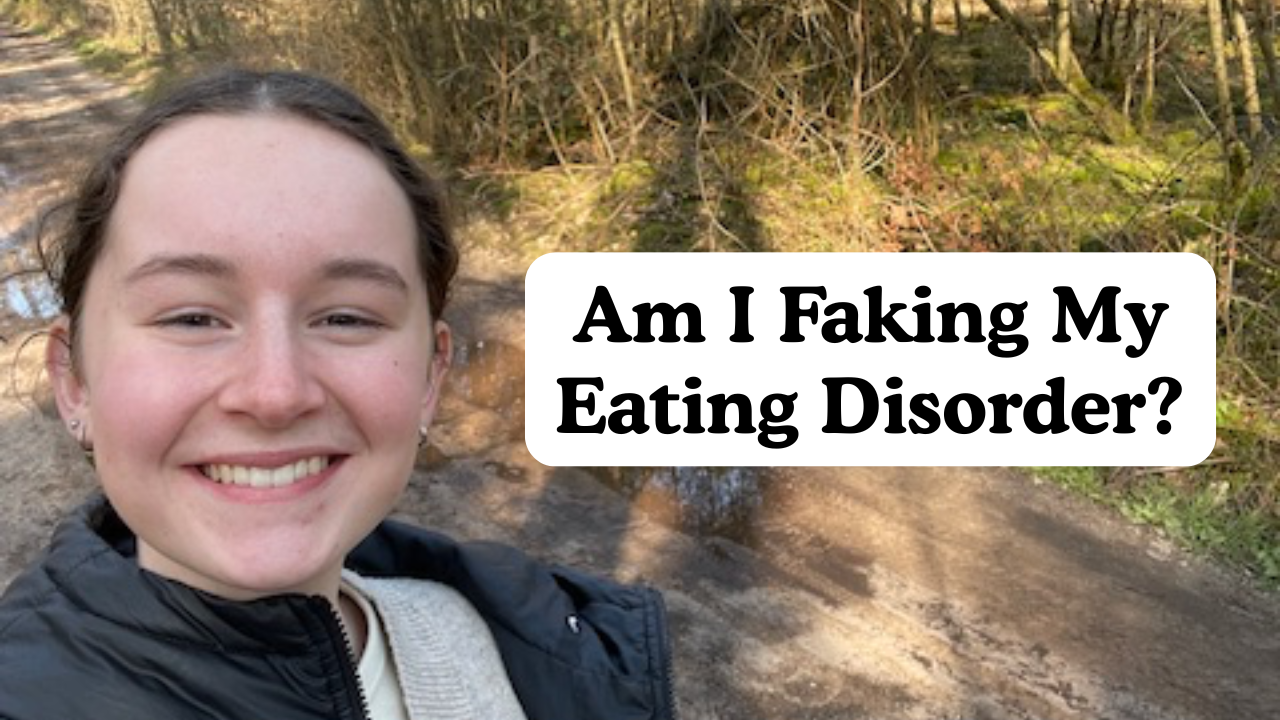
Hi! I’m Julia and I’m joining the Liv Label Free team! I’m an 18-year-old girl from the Netherlands and I absolutely love writing, reading, animals, and all things creative! I will be supporting Liv with content creation and posting, and helping the Liv Label Free vision come to life. I will also be posting blogs, and this is the first one! So, without further ado, let’s dive in:
“Am I faking my eating disorder?” was a question that went through my mind a lot during treatment. When I started Multi-Family Therapy (a program where multiple families with a child with an ED come together), I was terrified that the professionals would find out I wasn’t really “sick.”
Somewhere deep inside, I knew that I didn’t fit the “typical picture” of someone with anorexia. I didn’t start restricting my intake because I thought I was fat, and I could never relate to looking in the mirror and seeing a fat version of myself staring back. Restricting my intake and losing weight was about numbing my feelings and creating rules in a chaotic world.
What I didn’t know at the time was that I’m autistic. So my fear of weight gain didn’t stem from a fear of getting fat, but from a fear of not being able to handle life. Ever since I was a little girl, I’ve felt like an alien in this world. I like predictability and clear rules, and that was exactly what anorexia gave me. But because I didn’t develop an eating disorder due to body image issues or a desire to lose weight, the treatment didn’t help me. I thought this meant that I was faking my eating disorder, because why else wouldn’t highlighting the parts of my body I didn’t like on a piece of paper help me?
Looking back, I now realize that my fear of not having a “real” eating disorder was actually a fear of not receiving help. I didn’t know where all my struggles and loneliness came from, and I found it difficult to communicate my feelings. So in my mind, the only way to receive help was through my eating disorder.
Because of this, I (subconsciously) started copying the behavior of the girls around me in an attempt to have a “real” eating disorder. (While writing this, I realize that this was actually a form of masking! I just didn’t know what that was at the time!) But I continued to feel like there was something wrong with me because things didn’t get any better. I still struggled a lot with coping at school, making friends, and just handling life in general.
It wasn’t until I discovered that I’m autistic that I started to feel like I could leave my eating disorder behind. Before this discovery, I always felt like I needed my eating disorder to cope. I thought that if I could solve the underlying problems, such as feeling a lot of stress and pressure from school or struggling to make friends, it would give me the space to let go of the eating disorder. But no matter the advice people gave me, these problems didn’t go away. And that’s because I’m autistic, so my brain simply works in a different way!
Thanks to my autism discovery, I can now accommodate my needs much better and learn to live a life that truly fits me. Working with Liv through 1-1 Coaching was a very important part of this process, I can’t put into words how grateful I am for her support!
From the first moment we met, I felt a connection with her. She creates such a safe space, and I looked forward to our call every single week. She always understood me, often without me even having to put my feelings into words. That was incredibly helpful for me, since I find it quite difficult to express my feelings and experiences.
I’ve learned so much from her and her content, and we as a community are incredibly lucky to have her. She truly changed my life for the better with her positive energy and simply by being herself. Thank you so much Liv, because you are an absolute life-changer!
Ready to discover who YOU are beyond the ED? Book a Clarity Call for 1-1 Coaching here!
Want to learn how to navigate ED recovery as an autistic person?
Listen to my FREE TRAINING teaching you how to use your autistic traits to your advantage in ED recovery 💪